Showing posts with label Richard Linklater. Show all posts

Monday, December 04, 2006

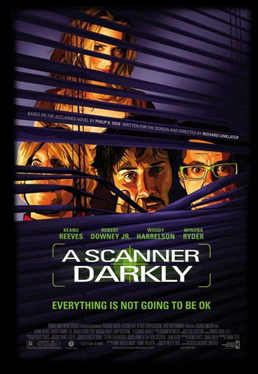
A Scanner Darkly


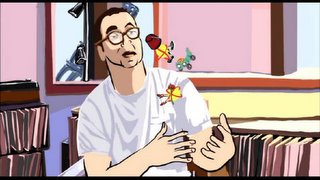
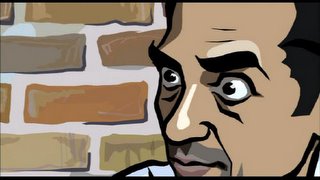
Went to see A Scanner Darkly this afternoon. It's an adaptation of Phillip K. Dick's novel of the same name, filmed and then digitally converted into animation. (The director, Richard Linklater (Slacker, Dazed and Confused, School of Rock) used the same technique in Waking Life, which I wrote a fair bit about last year.)
The film set 16 years into the future, where America's War on Drugs and War on Terror have become pretty much the same thing. The protagonsit is Bob Arctor (played by Keanu Reeves), an undercover police officer who is supposed to be spying on his drug addict household, and ends up becoming an addict himself. The drug he is using, Substance D, causes the part of him that is the spy and that part of him that is the user to split, and he ends up spying on himself.
There's trailers here (Windows Media Player) and here (Quicktime), and you can watch the first twenty-three minutes for free here.

Thursday, November 17, 2005

Waking Life: André Bazin and pantheism


There's this bit in Waking Life where the protagonist is in a cinema, watching two men, who seem to be in a cafe, talking about film. One of them says,

Cinema in its essence is about an introduction to reality. It's just that reality is actually reproduced. For Bazin, its not like a story telling medium, really. He feels like literature is better for telling a story than film. You know, if you tell a story, like a joke, like this guy walks into a bar, he sees a dwarf, that works really well because you're imagining this guy and this dwarf in the bar and there's this kind of imaginative aspect to it. But in film, you don't have that because you actually are filming a specific guy, in a specific bar, with a specific dwarf, of a specific height, who looks a certain way, right? So for Bazin, what the ontology of film has to do with is also what photography has to do with, except it has this dimension of time to it, and this greater realism to it. So it's about that guy, at that moment, in that space. And you know, Bazin is a Christian, so he believes that God obviously ended up being everything, and for him reality and God are the same. So what film is actually capturing is like God incarnate, creating. And this very moment, God is manifesting as this. And what the film would capture if it was filming us right now would be like God as this table, and God as you, and God as me, and God looking the way we look right now, and saying and thinking what we're thinking right now, because we are all God manifest in that sense. So film is actually like a record of God, or the face of God, or the ever changing face of God.
André Bazin was a French film critic who believed that film should (and could) show objective reality.
I'm not sure how accurate this guy's conclusion that 'Bazin is a Christian, so he believes that God obviously ended up being everything' is, but I think this guy is touching on some interesting stuff, like the idea that everything in the world says something about God. More like panentheism than pantheism.

Waking Life index
Sunday, November 06, 2005

Waking Life


I think I'm going to do a few posts about Waking Life, so this will be an index post.

free will (and intro)
existentialism
André Bazin and panentheism
, , ,

Waking Life: existentialism


Here is another monologue from Waking Life, which I think balances out the monologue from the free will post:

The reason why I refuse to take existentialism as just another French fashion or historical curiosity is that I think it has something very important to offer us for the new century. I'm afraid we're losing the real virtues of living life passionately, in the sense of taking responsibility for who you are, and the ability to make something of yourself. And feeling good about life. Existentialism is often discussed as if it's a philosophy of despair, but I think the truth is just the opposite. Sartre, once interviewed, said he never really felt a day of despair in his life. But one thing that comes out from reading these guys is not a sense of anguish about life so much as a real kind of exuberance, a feeling on top of it. It's like your life is yours to create. I've read the postmodernists with some interest, even admiration, but when I read them I always have this awful nagging feeling that something absolutely essential is getting left out. The more that you talk about a person as a social construction, or as a confluence of forces, or as fragmented or marginalized, what you do is you open up a whole new world of excuses. And when Sartre talks about responsibility, he's not talking about something abstract. He's not talking about the kind of self or soul that theologians would argue about. It's something very concrete, like you and me talking, making decisions, doing things and taking the consequences. It might be true that there are six billion people in the world and counting; nevertheless, what you do makes a difference. It makes a difference first of all in material terms, it makes a difference to other people, and it sets an example. In short, I think the message here is that we should never simply write ourselves off and see ourselves as the victim of various forces. It's always our decision who we are.
What I think is helpful here is that it isn't doubted that a person is a product of their experiences, but still points out that everybody still needs to be responsible for themselves. Sure, we don't get any choice about how we were brought up, but blaming our problems on our parents or the government isn't going to solve any of our problems.

Waking Life index

Saturday, November 05, 2005

Waking Life: free will


This afternoon I watched Richard Linklater (Slacker, Dazed and Confused, School of Rock)'s film Waking Life. It's about this guy who appears to be dreaming (the film's pretty surreal), and has philosphical discussions with various people.
The film is actually made up of animations, based on footage shot on digital camera. (The technique's called rotoscoping.)
One philosphical idea that is brought up is the idea of free will. This monologue sums up a lot of stuff I think needs to be considered when thinking about free will:

In a way, in our contemporary world view, it's easy to think that science has come to take the place of God. But some philosophical problems remain as troubling as ever. Take the problem of free will. This problem has been around for a long time, since before Aristotle in 350 B.C., St. Augustine, St. Thomas Aquinas, these guys all worried about how we can be free if God already knows in advance everything we're going to do. Nowadays, we know that the world operates according to some fundamental physical laws, and these laws govern the behavior of every object in the world. These laws, because they are so trustworthy, they enable incredible technological achievements. But look at yourself. We're just physical systems too, right? We're just complex arrangements of carbon molecules. We're mostly water. And our behavior isn't going to be an exception to these basic physical laws. So it starts to look like whether its God setting things up in advance, and knowing everything you're going to do, or whether it's these basic physical laws governing everything, there's not a lot of room left for freedom.

So you might try to just ignore the question, ignore the mystery of free will, and say, oh well, it's just an historical anecdote, it's sophomoric, it's a question with no answer, just forget about it. But the question keeps staring you in the face. Think about individuality for example. Who you are is mostly a matter of the free choices that you make. Or take responsibility. You can only be held responsible, you can only be found guilty, or you can only be admired and respected for things you did of your own free will. So the question keeps coming back. And we don't really have a solution to it. It starts to look like all our decisions are really just a charade.

Think about how it happens. There's some electrical activity in your brain, your neurons fire, they send a signal down into your nervous system, it passes along down into your muscle fibers, they twitch, you might reach out your arm. It looks like it's a free action on your part, but every part of that process is actually governed by physical laws, chemical laws, electrical laws, and so on.

So now it starts to look like the big bang set up the initial conditions, and the whole rest of human history, and even before, is really just the playing out of subatomic particles according to these basic fundamental physical laws. We think we're special. We think we have some kind of special dignity, but that now comes under threat. That's really challenged by this picture.

So you might be saying, well, wait a minute. What about quantum mechanics? I know enough contemporary physical theory to know it's not really like that. It's really a probabilistic theory. There's room. It's loose. It's not deterministic. And that's going to enable us to understand free will. But if you look at the detail, it's not really going to help because what happens is you have some very small quantum particles, and their behavior is apparently a bit random, they sort of swerve, their behavior is absurd in the sense that its unpredictable, and we can't understand it based on anything that came before. It just does something out of the blue according to a probabilistic framework. But is that going to help with freedom? I mean, should our freedom be just a matter of probabilities, just some random swerving in a chaotic system? That starts to seem like it's worse. I'd rather be a gear in a big deterministic physical machine than just some random swerving.

So we can't just ignore the problem. We have to find room in our contemporary world view for persons with all that that entails. Not just bodies, but persons. That means trying to solve the problem of freedom, finding room for choice and responsibility, and trying to understand individuality.
Any thoughts in response?

Waking Life index