Monday, November 21, 2005

Jesus: son of God or just wise?


Smurf Jesus, originally uploaded by blese.
There's been an interesting conversation going on over at Waving or Drowning?
C.S. Lewis says something in Mere Christianity about Jesus being either the son of God, a lunatic or a demon, and there being no room for one to consider his as simply a wise teacher. Robert disagrees. He doesn't believe Jesus was the son of God, but still thinks a lot of Jesus teachings are good.
Read here.

Friday, November 18, 2005

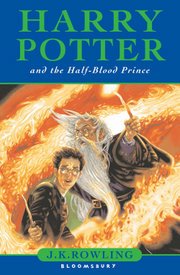
Harry Potter and the Half-Blood Prince


Earlier this week I read Harry Potter and the Half-Blood Prince (the most recent one). I'd been putting it off, because I'd been very disappointed with Order of the Phoenix (not much seemed to happen until the last couple of chapters), and had been told Half-Blood Prince was more of the same. But I quite liked this one.

There's an article here at Yahoo! News about the people who reckon Harry Potter encourages children to get involved in occult and pagan stuff.
And there's a pretty brief article here at Relevant, about Christian stuff in Harry Potter.

Thursday, November 17, 2005

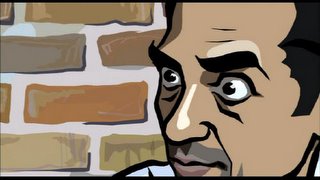
Waking Life: André Bazin and pantheism


There's this bit in Waking Life where the protagonist is in a cinema, watching two men, who seem to be in a cafe, talking about film. One of them says,

Cinema in its essence is about an introduction to reality. It's just that reality is actually reproduced. For Bazin, its not like a story telling medium, really. He feels like literature is better for telling a story than film. You know, if you tell a story, like a joke, like this guy walks into a bar, he sees a dwarf, that works really well because you're imagining this guy and this dwarf in the bar and there's this kind of imaginative aspect to it. But in film, you don't have that because you actually are filming a specific guy, in a specific bar, with a specific dwarf, of a specific height, who looks a certain way, right? So for Bazin, what the ontology of film has to do with is also what photography has to do with, except it has this dimension of time to it, and this greater realism to it. So it's about that guy, at that moment, in that space. And you know, Bazin is a Christian, so he believes that God obviously ended up being everything, and for him reality and God are the same. So what film is actually capturing is like God incarnate, creating. And this very moment, God is manifesting as this. And what the film would capture if it was filming us right now would be like God as this table, and God as you, and God as me, and God looking the way we look right now, and saying and thinking what we're thinking right now, because we are all God manifest in that sense. So film is actually like a record of God, or the face of God, or the ever changing face of God.
André Bazin was a French film critic who believed that film should (and could) show objective reality.
I'm not sure how accurate this guy's conclusion that 'Bazin is a Christian, so he believes that God obviously ended up being everything' is, but I think this guy is touching on some interesting stuff, like the idea that everything in the world says something about God. More like panentheism than pantheism.

Waking Life index

Wednesday, November 16, 2005

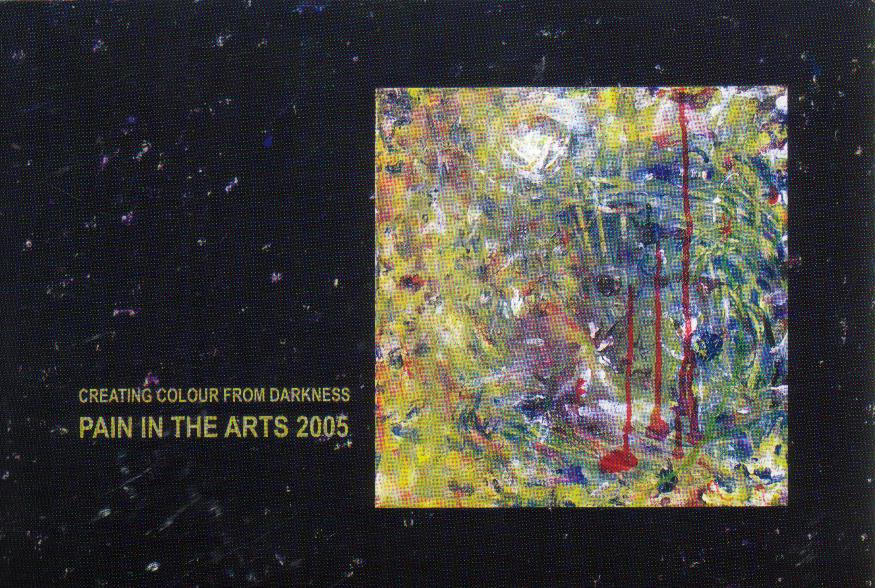
Creating Colour from Darkness


Spent most of yesterday at Urban Seed, framing the pictures for this ^ exhibition, and I'm helping set up today.
Pain in the Arts is Urban Seed's art group, that meets in Credo after lunch on Wednesdays, and at the end of each year they have an exhibition. Apparently DeeDee's dad's opening it this year.

Wednesday, November 09, 2005

Mr T gives up his chains


Mr T is going to do a reality show called I Pity The Fool where he helps people deal with fools. He says he'll more likely be wearing a suit and bow-tie than his gold chains.

"Because of the situation we're in now (after Katrina), I told myself, 'No, T, you can never wear your gold again. ' It's an insult to God."
props to Kyle

Tuesday, November 08, 2005

Esther: genocide


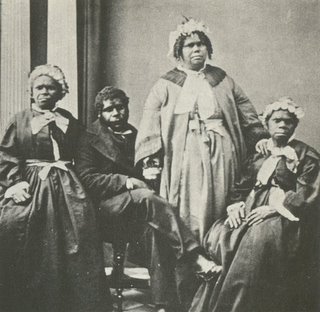
This is a picture of the last four Tasmanian Aborigines, including Truganini.

I read some more of the book of Esther on the bus to Batmania this morning.
In Chapter 2, the King starts to miss his wife (who he may or may not have had killed). So there's a beauty contest to try and find a new Queen. Esther 'wins', (Susan posted a little while ago on just how 'lucky' Esther probably was) but nobody knows that she's a Jewish exile, because Esther is a Babylonian name. (Her Jewish name was Hadassah.)

Grant Wildman from Tabor in Adelaide reckoned this was kind of like if during the war against the Aborigines someone who was part Aboriginal managed to gain a lot of influence in white society, due to the fact that they just seemed Caucasian.
(One of my friends wanted to do a theatre production based on Esther's story, and asked Grant for any ideas.)

In Chapter 3, Mordecai finds out that Haman, the King's favorite nobleman, wants to kill all the Jewish people, because Mordecai refused to bow to him. He asks the King if he can, and the King says he can.

I found it interesting what Haman said to the King to convince him:

There is a certain people dispersed and scattered among the peoples in all the provinces of your kingdom whose customs are different from those of all other people and who do not obey the king's laws; it is not in the king's best interest to tolerate them.
(Esther 3:8)
Just reminded me heaps of the paranoia toward Muslims and Arabs in Western countries since the War of Terror began.

Esther

Started reading the book of Esther the other day, including the deuterocanonical bits. (I'll post on why I've been reading the deuterocanonical books later.)
Anyway, some people reckon it shouldn't be included in the scriptures at all, some because it doesn't directly mention YHWH, and others because it's debated whether it is a historical book or a Jewish remix of a story from the Babylonian mythology. And other people don't like it because the Greek version has bits that the Hebrew version doesn't. Either way, I don't doubt that it's useful.
There's a great big elephant of an argument going on about the book of Esther it here at Wikipedia.

Anyway, so far I've read the first Septuagint bits, where Esther's relative Mordecai saves the King of Babylon from a conspiracy.
And I've read the first chapter from the Tanakh version, where the Queen doesn't do what the King says. Men all over the country start to worry that they won't be able to tell their wives what to do anymore either, so the King has the Queen executed.

Monday, November 07, 2005

Frontlines of urban education

Street Smarts is the blog of an art teacher at an inner-city public school in Celveland:

The Cleveland Municipal School District is a system fraught with the challenges inherent to a large district and an impoverished city. I am publishing this journal in response to those who are quick to criticize "those lazy, greedy, teachers". I offer you a glimpse into my world. I have always been a student of behavior. As a child, I would tame wild creatures and befriend strays. When I grew up, my natural empathy helped me become adept at observing, understanding and predicting human behavior, as well as discovering and studying what inspires and motivates people. Especially fascinating, are relationships; who we choose to associate with, and why; how we interact with one another, and how we affect each others lives.
Also, for some reason I got hits from two closely linked Cleveland blogs (Cleveland Humour and Surfing Lake Erie) yesterday, and can't work out why.

Sunday, November 06, 2005

Waking Life


I think I'm going to do a few posts about Waking Life, so this will be an index post.

free will (and intro)
existentialism
André Bazin and panentheism
, , ,

Waking Life: existentialism


Here is another monologue from Waking Life, which I think balances out the monologue from the free will post:

The reason why I refuse to take existentialism as just another French fashion or historical curiosity is that I think it has something very important to offer us for the new century. I'm afraid we're losing the real virtues of living life passionately, in the sense of taking responsibility for who you are, and the ability to make something of yourself. And feeling good about life. Existentialism is often discussed as if it's a philosophy of despair, but I think the truth is just the opposite. Sartre, once interviewed, said he never really felt a day of despair in his life. But one thing that comes out from reading these guys is not a sense of anguish about life so much as a real kind of exuberance, a feeling on top of it. It's like your life is yours to create. I've read the postmodernists with some interest, even admiration, but when I read them I always have this awful nagging feeling that something absolutely essential is getting left out. The more that you talk about a person as a social construction, or as a confluence of forces, or as fragmented or marginalized, what you do is you open up a whole new world of excuses. And when Sartre talks about responsibility, he's not talking about something abstract. He's not talking about the kind of self or soul that theologians would argue about. It's something very concrete, like you and me talking, making decisions, doing things and taking the consequences. It might be true that there are six billion people in the world and counting; nevertheless, what you do makes a difference. It makes a difference first of all in material terms, it makes a difference to other people, and it sets an example. In short, I think the message here is that we should never simply write ourselves off and see ourselves as the victim of various forces. It's always our decision who we are.
What I think is helpful here is that it isn't doubted that a person is a product of their experiences, but still points out that everybody still needs to be responsible for themselves. Sure, we don't get any choice about how we were brought up, but blaming our problems on our parents or the government isn't going to solve any of our problems.

Waking Life index

Saturday, November 05, 2005

Waking Life: free will


This afternoon I watched Richard Linklater (Slacker, Dazed and Confused, School of Rock)'s film Waking Life. It's about this guy who appears to be dreaming (the film's pretty surreal), and has philosphical discussions with various people.
The film is actually made up of animations, based on footage shot on digital camera. (The technique's called rotoscoping.)
One philosphical idea that is brought up is the idea of free will. This monologue sums up a lot of stuff I think needs to be considered when thinking about free will:

In a way, in our contemporary world view, it's easy to think that science has come to take the place of God. But some philosophical problems remain as troubling as ever. Take the problem of free will. This problem has been around for a long time, since before Aristotle in 350 B.C., St. Augustine, St. Thomas Aquinas, these guys all worried about how we can be free if God already knows in advance everything we're going to do. Nowadays, we know that the world operates according to some fundamental physical laws, and these laws govern the behavior of every object in the world. These laws, because they are so trustworthy, they enable incredible technological achievements. But look at yourself. We're just physical systems too, right? We're just complex arrangements of carbon molecules. We're mostly water. And our behavior isn't going to be an exception to these basic physical laws. So it starts to look like whether its God setting things up in advance, and knowing everything you're going to do, or whether it's these basic physical laws governing everything, there's not a lot of room left for freedom.

So you might try to just ignore the question, ignore the mystery of free will, and say, oh well, it's just an historical anecdote, it's sophomoric, it's a question with no answer, just forget about it. But the question keeps staring you in the face. Think about individuality for example. Who you are is mostly a matter of the free choices that you make. Or take responsibility. You can only be held responsible, you can only be found guilty, or you can only be admired and respected for things you did of your own free will. So the question keeps coming back. And we don't really have a solution to it. It starts to look like all our decisions are really just a charade.

Think about how it happens. There's some electrical activity in your brain, your neurons fire, they send a signal down into your nervous system, it passes along down into your muscle fibers, they twitch, you might reach out your arm. It looks like it's a free action on your part, but every part of that process is actually governed by physical laws, chemical laws, electrical laws, and so on.

So now it starts to look like the big bang set up the initial conditions, and the whole rest of human history, and even before, is really just the playing out of subatomic particles according to these basic fundamental physical laws. We think we're special. We think we have some kind of special dignity, but that now comes under threat. That's really challenged by this picture.

So you might be saying, well, wait a minute. What about quantum mechanics? I know enough contemporary physical theory to know it's not really like that. It's really a probabilistic theory. There's room. It's loose. It's not deterministic. And that's going to enable us to understand free will. But if you look at the detail, it's not really going to help because what happens is you have some very small quantum particles, and their behavior is apparently a bit random, they sort of swerve, their behavior is absurd in the sense that its unpredictable, and we can't understand it based on anything that came before. It just does something out of the blue according to a probabilistic framework. But is that going to help with freedom? I mean, should our freedom be just a matter of probabilities, just some random swerving in a chaotic system? That starts to seem like it's worse. I'd rather be a gear in a big deterministic physical machine than just some random swerving.

So we can't just ignore the problem. We have to find room in our contemporary world view for persons with all that that entails. Not just bodies, but persons. That means trying to solve the problem of freedom, finding room for choice and responsibility, and trying to understand individuality.
Any thoughts in response?

Waking Life index

Going away far far away

Well, I'm only moving about two hours away, to Batmania, but John wrote on the invitations to our party that we're both moving 'away far far away'.
Spent the morning yesterday and today cleaning and packing. Moving out on Thursday.
Last night we had the party, at John's, which featured a discussion about how people would evolve a brain that they only use 10% of. I think Hendo suggested that it might have been so they'd look less stupid. (My answer is that I don't really care.)
Also, Bonnie and Ash walked to John's place from town (and got lost a couple of times) because they'd never been to Wendouree before and didn't know how far it was.

Wednesday, November 02, 2005

Before the Eviction


'Adam Bored'
Been looking at a series of SHAG (Josh Agle) pictures that tell the story of Adam and Eve. It's called Before the Eviction.

Printing Wikipedia

Entries from Wikipedia are going to be available in print from soon, particularly so that people in developing countries can benefit from them. Article at Yahoo! News. (Guess who owns Wikipedia?)

All Souls Day

Today's All Souls Day, so I've read up on it a bit. Apparently today some people pray for people that have died, to try and make sure they get into Heaven. According to some people this is heretical, and that it has pagan origins. I'm not sure it's heretical (I could be wrong), although I do think the Catholic doctorine relating to Purgatory is reasonably dodgey.
Anyway, one of the reasons I'm not sure that it's heresy is that the scriptures say Jesus 'went and preached to the spirits in prison who disobeyed long ago when God waited patiently in the days of Noah while the ark was being built.' (2 Peter 3:19-20) So perhaps prayers for the dead would influence how they respond to Jesus preaching? Anyway, I don't think it's definitely heretical. I also don't know particularly much about it.
As for the pagan origins, I think that perhaps we should better acknowledge that Christianity has had a lot of pagan influences as well as Jewish. Same sort of thing as I was talking about yesterday, about being familiar with our spiritual ancestory.

Tuesday, November 01, 2005

Teresa of Avila


'Saint Teresa'
by François Gérard

Been reading a bit about Teresa of Avila, because it's All Saints Day.
Teresa of Avila was a Spanish mystic. When she was a kid she wanted to run away from home so she could get martyred:

I used to discuss with my brother ways and means of becoming martyrs, and we agreed to go together to the land of the Moors, begging our way for the love of God, so that we might be beheaded there.
(Wikiquote)
In 1534 she did run away from home and became a nun. She was often sick. While she was sick she would experience periods of spiritual ecstacy. Around 1556, her friends came to believe that she was possessed by demons. They managed to convince Teresa, and for a long time she tortured herself because of this.
Begining in 1559, she experienced vision of Jesus that lasted two years. Another of her visions involved an angel repeatedly stabbing her in the heart with a burning spear.
Teresa of Avila, along with Juan de la Cruz played an important role in the reformation of the Carmelite monastic order. She founded many convents and monastaries which aimed to restore the original monastic ideals of poverty. The Spanish Inquisition didn't like this very much, and eventually forced her to 'retire' to one of her convents.
During the final years of her life she gained favor with Pope Gregory XIII. She managed to open another four convents in the last three years of her life. She died in 1582.

All Saints


Originally uploaded by shadowplay.

Today a lot of Western Christians observe All Saints (the Eastern Orthodox had it earlier in the year), when they remember the Christians who were around before them, particularly marytrs.
For me this is a reminder that in most Evangelical churches we don't seem to have much connection to our spiritual ancestors, and I think that's a pity. So I'd like to encourage people to find out a bit more about their spiritual ancestors, whoever they happen to be. If you do, please blog about what you find, so I can link to it.

Tomorrow's All Souls Day, so I'll probably post some thoughts about that as well.

'Saving Elmo'


'Saving Elmo'
is a series of photos of an old Elmo toy that estherase found in the street, and fixed up.

Advice from 'Peter'

Live such good lives among the pagans that, though they accuse you of doing wrong, they may see your good deeds and glorify God on the day he visits us.
(1 Peter 2:12)
Read this the week before last, but didn't blog about it, because it was part of a listening-to-God thing I was doing with the people from Retro and Baptist church in Pleasant Street, because they're starting to consider new directions. We weren't supposed to talk about what God might have been showing us during the two weeks of listening, so we wouldn't influence each other. Patrick asked me to take part in it because I was involved with Retro a bit, earlier in the year.

Anyway, I found this advice from 'Peter' (it's not likely that the Apostle Peter actually wrote 1 Peter, because it quotes the Septuagint rather than the Tanakh) helpful in dealing with Centrelink and the uni stuffing me around with admin stuff, and them saying that all the problems I was having with them were my fault (some of them most likley are). The most important thing wasn't actually getting them to admit they'd made mistakes. It was more important for me to be patient and treat them with respect.

Puritans: old, new and reluctant

Tab's posted some stuff she's been learning about the Puritans:

The Puritans are commonly seen as bigoted fundamentals and extremists, which many were, but they begin simply as devoted and radical believers who wanted to see a return to biblical traditions in the church.
Kevan linked this Observer article about the New Puritans:
A generation of young, educated and opinionated people determined to sidestep the consumerist perils of modern life. So if you own a 4x4, spend all your time shopping, or are simply overweight - watch your back. Lucy Siegle meets the moral minority aiming to mend our ways...
And Ditch Monkey (apparently he lives in a ditch) seems to be saying he actually isn't a New Puritan:
Over the past few days I have been accused of being a ‘New Puritan’...
On Thursday afternoon next week I am going to go to the airport (hopefully the right one this time), from there I am going to fly to Barbados, once there I am going to go surfing, get drunk, chase girls, dance like an idiot, eat too much, hire a motorbike...

Monday, October 31, 2005

Samurai

On Friday night we alpha tested Samurai, an RPG that Nic and Stack made up, which is loosely based on feudal Japan. It was very good, considering that it was the alpha test.
If anyone wants to test it out, Nic's posted the rules here, in the RPG section of the new Reality is Overrated Forum.

Updated rules
Updated setting
Martial arts

Thursday, October 27, 2005

the dog on the tuckerbox


the dog on the tuckerbox
Originally uploaded by little pieces....

Security Parking

Yesterday when we got to Batmania, we spent at least half and hour trying to find somewhere to park. We eventually parked at Security Parking, on the same block as the Museum of Victoria. $10 all day. This is the (rather amusing) ticket:

Tuesday, October 25, 2005

Off to Batmania

Just found out tonight that I'm going to Batmania tomorrow and not Thursday, so I can't go to Nic's Faustoberfest. Me and John are going to the Immigration Museum (historically immigration's been very important in our country, particularly Batmania), having lunch at Urban Seed, and going to the Forge Postcards event.
More about it all tomorrow night probably.

Colossians

Been reading Colossians. My mentor Michael's been reading it too, and reckons one of the main things he's found from reading it this time around is that the Christ needs to be at the centre of our spirituality (2:6-20). Michael reckons that two things that can distract Christians from the Christ are obsession with rules:

Since you died with Christ to the basic principles of this world, why, as though you still belonged to it, do you submit to its rules: 'Do not handle! Do not taste! Do not touch!'? These are all destined to perish with use, because they are based on human commands and teachings.
(Colossians 2:20-22)
and obsessive pursuit of spiritual experiences:
Do not let anyone who delights in false humility and the worship of angels disqualify you for the prize. Such a person goes into great detail about what he has seen, and his unspiritual mind puffs him up with idle notions.
(Colossians 2:18)
He thinks it's these things that usually stuff us Christians up.

Hurrah


My blog is worth $11,855.34.
How much is your blog worth?

Monday, October 24, 2005

Sin City #2 A Dame to Kill For


Read Sin City #2 A Dame to Kill For at the library yesterday. Sin City is a series of urban noir-style comics, which have recently been adapted into a film. I decided I wanted to look at the comics before seeing the film.
Darren's posted a discussion paper on the film here at Digital Orthodoxy.
Really impressed by the drawing style, but the plot didn't interest me very much. Seemed like just a generic femme fatale story. Dunno, maybe some of the others are better.

, , , ,

Saturday, October 22, 2005

Amusing bits from Acts

Been reading Acts. I find these bits amusing:

Seated in a window was a young man named Eutychus, who was sinking into a deep sleep as Paul talked on and on. When he was sound asleep, he fell to the ground from the third story and was picked up dead.
(Acts 20:9)
(Don't worry he gets resurrected.)
'You are out of your mind, Paul!' he shouted. 'Your great learning is driving you insane.'
Acts 26:24

Friday, October 21, 2005

SwarmSketch

SwarmSketch is a game where many users get to contibute one line each to a drawing, and vote on how visible other contributors lines should be. There is a new picture each week. Today's topic is 'bird flu'.

'Interesting thought that I had last night...'

Adam's done a post on Jesus and Superman here.

Enmity and friendship

'An enemy is a friend waiting to be made; that's the only hope for this conflict-ridden world.' - Desmond Tutu

Thursday, October 20, 2005

Big cats

Tonight at the writers group we talked a bit about Australia's big cats. We also talked a bit about the possibility of diprotodonts in Western Australia, but they haven't been in the tabloid.

This bloke ^ from Noble Park (where I lived longer than anywhere else) reckons he shot a big cat near Sale. This article says it might have actually been a really really big feral cat.

Ribbits

Yesterday at the butcher in Bridge Mall they were selling 'ribbits'. Dunno what that means. Frog noises? Rabbits from New Zealand?

Theology and culture

An old(er) post by Fernando from his Desk:

...the most common response is either naive acceptance, or reactionary rejection of culture. By contrast, we should approach our culture open both to find what is good and reject that which is not, on the basis of familiarity with Christ and with the practice of faith...
Read the whole post here. Also check out Matt Stone's post about Daniel and how we measure missional success.

Tuesday, October 18, 2005

My friends at Centrelink

Yesterday Centrelink cut my allowence again. I became extremely angrified at this yesterday morning when I went to my bank account and found it empty. Luckily I found $2 on the footpath, and was thus able to get to uni and also to deangrify myself significantly.
Went in there today and they said it was because I hadn't gotten my parents to fill in a form which I was never sent in the first place, because they think I still live at my old address, even though I told them I'd moved at the start of the year and filled the form you're supposed to fill out when you move. So because they ahve no record, they reckon I just didn't notify them.
Exactly the same thing happened last year. Centrelink is really good, but it is also quite crap.

Saturday, October 15, 2005

Night on the Tiles

Last night we (Reality Writers) had a gig (Night on the Tiles) at Grainery Lane and made lots of money, so it looks we are going to publish an anthology of stuff we've written this year.
It turned out that the MC we got for the gig was the brother of a girl I went out with in year 12.
I read bits from my ¿novel?, Prochorus. Some of us also did a radio-play style reading of Hendo's Nerd Diaries #9, because he refused to read anything.
After the readings, 23rd of Elvis (their guitarist is from Snog) played and this guy threw an armchair at them.

Thursday, October 13, 2005

Eve's Memory


Interesting review at The Program. Eve's Memory part of a trilogy of plays by Duncan Graham, based on stories from Genesis. It's about an Adam and Eve who believe themselves to be the last people on Earth. Read the whole review here.

Wednesday, October 12, 2005

'I’ve lost it…'

Lexi's written a good post about the mystery and beauty of faith:

Sometimes I wish I were a witch, or a wiccan like my sister so I’d have lovely stories of mystery and beauty of nature - sacred rituals in the small clearing of the wood - describing the underside of a sparrow’s wing - believing in the earth, her cycles, the seasons and the winds.
Read the whole post here.

A way that people may possibly be getting ripped off and getting less stuff than they think they are getting

I've just been reading Anthony's Scrambled #3 ($2.50 at Rediscovery, Sturt St, Ballarat) about his pen leaking on the plane, because of the lower air pressure.
Then a couple of pages later Anthony says something about dipping his pen in Coke on the plane to Vancouver.
Then I thought, People are probably getting less stuff than they think they are! Because of the low air pressure, the Coke (or any other beverage) would be less compressed and if the Coke had been served on the ground! Aaaaargggh!

Saturday, October 08, 2005

Rebbe Last Supper


rebbe_lastsupper_3
Originally uploaded by
adamholz.

A World of Entertainment


melbourne9
Originally uploaded by
zaido.

Another place we visited on our city walk last week was Crown Casino. Unfortunately they wouldn't let us in, because they reckoned Erin wasn't old enough, and she didn't have ID on her. So we stood in the foyer and read this piece of scripture:

Jesus sat down opposite the place where the offerings were put and watched the crowd putting their money into the temple treasury. Many rich people threw in large amounts. But a poor widow came and put in two very small copper coins, worth only a fraction of a penny.
Calling his disciples to him, Jesus said, 'I tell you the truth, this poor widow has put more into the treasury than all the others. They all gave out of their wealth; but she, out of her poverty, put in everything—all she had to live on.'
(Mark 12:41-44)
So it looks like Jesus reckons it's awesome that this woman is putting all her money in. But when we look at this scripture, we don't often look at the bit that comes before:
As he taught, Jesus said, 'Watch out for the teachers of the law. They like to walk around in flowing robes and be greeted in the marketplaces, and have the most important seats in the synagogues and the places of honor at banquets. They devour widows' houses and for a show make lengthy prayers. Such men will be punished most severely.'
Jesus sat down opposite the place where the offerings were put and watched the crowd putting their money into the temple treasury. Many rich people threw in large amounts. But a poor widow came and put in two very small copper coins, worth only a fraction of a penny.
Calling his disciples to him, Jesus said, 'I tell you the truth, this poor widow has put more into the treasury than all the others. They all gave out of their wealth; but she, out of her poverty, put in everything—all she had to live on.'
(Mark 12:38-44)
Jesus definitely doesn't undervalue the poor widow's offering. He says that she put in more than anyone else.
But it seems like he's also saying that the religious leaders are getting rich off the offerings of people like this poor widow. It should really be the other way around. The rich religious leaders' money should've been used to help the poor people.

It seemed like there was something similar going on at Crown. The Victorian state government is dependent on gambling, and most of the people being 'entertained' at crown are spending a lot more than they can easily afford. So, like the rich religious leaders, they're taking money from people who can't afford it, people they should be helping.

I also thought about the last time I'd been to Crown. It'd been for a dinner/meeting at Santé, with other leaders of a Christian organisation, which is part of one of Australia's larger church denomonations. I remember I hadn't eaten in quite a while, but still, did the money that paid for my rather expensive dinner come from the people it should have been going to help? Had they been promised that if they gave the church more than they could afford (perhaps based on the story of the poor widow) God would bless them by making them rich?

More about Crown:
'The four Myths of Crown Casino' - Tim Costello, John Mark Ministries
'High stakes down under' - Mark Brolly, The Tablet

Friday, October 07, 2005

Bushfire


bushfire
Originally uploaded by Zimbo.

To you, O Lord, I cry. For fire has devoured the pastures of the wilderness, and flames have burned all the trees of the field. Even the wild animals cry to you because the watercourses are dried up, and fire has devoured the pastures of the wilderness.
( Joel 1:19-20)
This reminds me that we are in fact fortunate when 'crap' stuff happens, because it means we turn to God. Truly, the poor, the weeping, et cetera are blessed, because it's easier for them to find God.

Thursday, October 06, 2005

Northern Lights

(a.k.a. The Golden Compass)

In the sweat of thy face shalt thou eat bread, till thou return unto the ground; for out of it wast thou taken: for dust thou art, and unto dust shalt thou return.
(Genesis 3:19)
Just finished reading Northern Lights a couple of hours ago. It's set in a parallel universe that has a lot in common with ours. In this world the Christian church is still very powerful, and it doesn't seem like there has been a Reformation.
The book is largely concerned with the discovery of elementary particles called Dust, which are attracted to people. The church believes Dust is the cause of original sin and, ironically, is conduting cruel experiments on children to try and work out how Dust (and sin) might be destroyed.

Apparently some Christian groups have been upset by this book and the rest of the trilogy. I think it's still pretty under the radar though. There'll probably be more of a fuss when the film comes out.
It seems to me more that Philip Pullman's bothered by the church's stumblings into dogmatism and hypocracy than by the Christ himself. I'll see what I think once I've finished the trilogy.

Tuesday, October 04, 2005

People making animal noises

Seb is playing a CD of people making animal noises. It including the old-time favorite 'Midget Animal Growling' and the one hit wonder 'Small Animal Crying out in Distress'.
He says he's looking for sound effects for the production the second year theatre students are doing next week.

Monday, October 03, 2005

Landowners and tenants in Batmania

Jesus said to his audience,

'Listen to another parable: There was a landowner who planted a vineyard. He put a wall around it, dug a winepress in it and built a watchtower. Then he rented the vineyard to some farmers and went away on a journey. When the harvest time approached, he sent his servants to the tenants to collect his fruit.
'The tenants seized his servants; they beat one, killed another, and stoned a third. Then he sent other servants to them, more than the first time, and the tenants treated them the same way. Last of all, he sent his son to them. 'They will respect my son,' he said.
'But when the tenants saw the son, they said to each other, "This is the heir. Come, let's kill him and take his inheritance." So they took him and threw him out of the vineyard and killed him.
'Therefore, when the owner of the vineyard comes, what will he do to those tenants?'
'He will bring those wretches to a wretched end,' they replied, 'and he will rent the vineyard to other tenants, who will give him his share of the crop at harvest time.'
Jesus said to them, 'Have you never read in the Scriptures:
"The stone the builders rejected
has become the capstone;
the Lord has done this,
and it is marvelous in our eyes"
'?
'Therefore I tell you that the kingdom of God will be taken away from you and given to a people who will produce its fruit. He who falls on this stone will be broken to pieces, but he on whom it falls will be crushed.'
When the chief priests and the Pharisees heard Jesus' parables, they knew he was talking about them. They looked for a way to arrest him, but they were afraid of the crowd because the people held that he was a prophet.
(Matthew 21:33-46)
(This story is in Luke and Mark's gospels as well.)

Normally when this story is explained, it's said that the landowner is God, the rebellious tenants are the Jewish people, and the people who get to take over the Jews' old jobs are the Christians. (There's a more indepth explanation of this interpretation here.)

One thing they do at Urban Seed is take groups on walks around the city to look at different social issues, and to compare stuff in the city with stuff in the scriptures. Last Monday, Marcus took us on one of these walks.
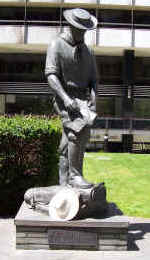
One of the places we went to was the statue of John Batman. John Batman claimed to be the founder of Melbourne (although he wanted it to be called Batmania). Batmania claimed to have made an agreement with the Wurundjeri people, to rent their land from them. Although he didn't agree to pay them very much, the government refused to recognise this agreement, because the colony had been founded on the premise that the whole continent was uninhabited. So John Pascoe Fawkner was recognised as the official founder of Melbourne, and there is a statue of him just near Batman's.

Marcus reckoned there was something similar going on in Jesus' story. He reckoned the landowner in the story was probably a real landowner, not a symbolic one. Apparently, the Pharisees and chief priests owned a lot of land. They used to rent their land out to the people who lived and worked on on it. However, according to Jewish law (Leviticus 25), all land was supposed to be redistributed to its traditional owners every Jubilee (fifty years). But as far as we know this law was never followed.

However, Jesus doesn't actaully say who symbolises who in the story.

In this article (title's way to long), Herman C. Waetjen presents another idea about what Jesus was trying to do. He notices that Jesus starts off the story a lot like Isaiah's Song of the Vineyard:
My loved one had a vineyard
on a fertile hillside.
He dug it up and cleared it of stones
and planted it with the choicest vines.
He built a watchtower in it
and cut out a winepress as well.
(Isaiah 5:1-2)
It's tradionally understood that this piece of scripture is talking about God. Waetjen reckons that Jesus started it off like that to trick the chief priests and Pharisees. If the Pharisees interpreted the landowner as being God, then that would make them the rebellious tenants. So perhaps Jesus was trying to trick them into looking at the situation from the point of view of the people they were oppressing?

What do you reckon?

Expression of extreme botherment

If I knew how much botherment going to university while living off Centrelink would cause, I don't think I would have bothered.
Last year I moved into the student residence at Gillies Street. At about Easter, Centrelink cut back my allowence so I had about $10 a week left after rent. So I decided to eat stuff and keep going to classes and I got behind in rent.
This year I've been gradually paying it off, but there's still a lot to pay off.
Anyway, since the start of this semester I've been trying to get enrolled in two off-campus classes so that I can finish my diploma, but everyone kept sending me to someone else. Today it looked like I was finally going to get enrolled. But they won't let me because because of my debt, even though I've been paying it off.
And the Commonwealth Bank keeps taking my money, even though I'm a student! So if you know a bank that doesn't do things like that please tell me, because I am in the right mind to change my account if they don't sort it out!

, , ,

Friday, September 30, 2005

Who's the addict?

One question we asked a few times this week at Urban Seed was, 'Who's the addict?'
Twenty-five percent of Melbourne's heroin use takes place in the laneway behind Collins Street Baptist Church. At the same time, near the front entrance, someone is spending thousands of dollars on a shirt or tie. However, these two addictions are seen very differently.
This led to talking about how our addictions to consumption effect other people (like the people who make our clothes or grow our coffee) and the idea of getting addicted to good things, like prayer or reading scripture or recycling. Marcus told us about this guy who got off heroin by getting addicted to Catholicism.
At lunch yesterday I talked to a guy who's been off heroin for seven months, with the help of more socially acceptable drugs: alcohol and marijuana. He's hoping to eventually get down to just tobacco, and then give that up too.

Monday, September 26, 2005

Mission Exposure Week

Well, last night I had a big change of plans. Today I was supposed to be going up to Ballarat to enrol in off-campus classes. Then tomorrow I was supposed to be going down to Geelong for the rest of the week for the Ignite Warrnambool team-building camp.
However, last night I got a call from Urban Seed asking if I wanted to come to Mission Exposure Week, because a heap of people who were meant to come pulled out. So, seeing as if my application for residency there is successful I won't be able to be on the Ignite team anyway, I'll be at Urban Seed most of this week instead.

I won't be blogging for a little while, so go and join in at Narrative Free-For-All. (If you remember Battle Blog, it's possibly kind of similar, but better organised.)

Friday, September 23, 2005

Home Interweb cable repairmentage

Earlier this morning, as I was plugging the Interweb cable for my parents' computer into the wall, the plug fell to bits. This was largely due to someone having a tantrum and ripping it out of the wall many moons ago.
Luckily, Burna managed to repair it with foil from the garlic bread we'd been eating.

Wednesday, September 21, 2005

Hurricane Katrina: punishment?

Recently there’s been Christians saying that Hurricane Katrina ruined New Orleans because the people of the city had done bad stuff, like having lots of abortions and being poor. (Basically, karma.) Just been reading about how Jesus responded to similar ideas:

Now there were some present at that time who told Jesus about the Galileans whose blood Pilate had mixed with their sacrifices. Jesus answered, 'Do you think that these Galileans were worse sinners than all the other Galileans because they suffered this way? I tell you, no! But unless you repent, you too will all perish. Or those eighteen who died when the tower in Siloam fell on them—do you think they were more guilty than all the others living in Jerusalem? I tell you, no! But unless you repent, you too will all perish.'
(Luke 13:1-5)
So Jesus says that people who die tragically aren’t any worse than people who die peacefully in their sleep at the age of a hundred and four. But he also says that this will happen to everyone who doesn’t return to God. At first this seems pretty contradictory to me.
I’m thinking now that Jesus is suggesting that a person appearing very unfortunate during their life isn’t necessarily a bad person, and that a person appearing very fortunate during their life is not necessarily a good person.
He seems to be saying that we’re all just as bad as each other, but that this can be accommodated and fixed if we agree to be reconciled with God.

More on hypocracy

When Jesus had finished speaking, a Pharisee invited him to eat with him; so he went in and reclined at the table. But the Pharisee, noticing that Jesus did not first wash before the meal, was surprised.
Then the Lord said to him, 'Now then, you Pharisees clean the outside of the cup and dish, but inside you are full of greed and wickedness. You foolish people! Did not the one who made the outside make the inside also? But give what is inside the dish to the poor, and everything will be clean for you.
'Woe to you Pharisees, because you give God a tenth of your mint, rue and all other kinds of garden herbs, but you neglect justice and the love of God. You should have practiced the latter without leaving the former undone.
'Woe to you Pharisees, because you love the most important seats in the synagogues and greetings in the marketplaces.
'Woe to you, because you are like unmarked graves, which men walk over without knowing it.'
(Luke 11:37-44)
For some reason this reminds me of a clip from a surrealist film called Le Fantôme de la Liberté (Phantom of Freedom) we watched in Film Movements and Theories a few weeks ago. It’s a satire of the bourgeoisie (French middle class).
At the start of the clip it appears that a number of people have turned up to share dinner together. However, when they sit down at what appeared to be a dining table, it turns out to be surrounded by toilets. They all drop their trousers and skirts and sit down. As they use the toilets together they talk haute couture and complain about the smell of Madrid, until one of them excuses himself to go and eat.
And then, look! There’s me watching this clip, feeling distain for the middle class, and feeling that I’m so much better than them. Without God helping me change I’d be stuffed.

Monday, September 19, 2005

Jesus goes home

This is about when Jesus went back to his hometown and got to be the guest speaker in the synagogue:

All spoke well of him and were amazed at the gracious words that came from his lips. ‘Isn't this Joseph's son?’ they asked.
Jesus said to them, ‘Surely you will quote this proverb to me: “Physician, heal yourself! Do here in your hometown what we have heard that you did in Capernaum.”’ (Luke 4:22-23)

It seems like Jesus is suggesting that they’re going to try and injure him, and see if he can save himself (‘Physician, heal yourself!’). Reminds me of later, when he’s being crucified, and people say, ‘He saved others; let him save himself if he is the Christ of God, the Chosen One.’ (Luke 23:35)

Now Jesus says something they don’t like too much at all, and they do try to injure him:
‘I tell you the truth,’ he continued, ‘no prophet is accepted in his hometown. I assure you that there were many widows in Israel in Elijah's time, when the sky was shut for three and a half years and there was a severe famine throughout the land. Yet Elijah was not sent to any of them, but to a widow in Zarephath in the region of Sidon. And there were many in Israel with leprosy in the time of Elisha the prophet, yet not one of them was cleansed — only Naaman the Syrian.’
All the people in the synagogue were furious when they heard this. They got up, drove him out of the town, and took him to the brow of the hill on which the town was built, in order to throw him down the cliff. But he walked right through the crowd and went on his way.
(Luke 4:24-30)

Is God generous?

I’m in Melbourne at the moment, so tonight (Sunday night) I went to my old church, where I was baptised four years ago.
We read the parable (or riddle, as I’ve been thinking of them) about the workers at the winery (Matthew 20:1-16), and then Mark (the pastor) got us to talk about whether God is generous. He got us to look through some papers, and talk about whether the things that we found made God seem generous or not.
What stood out to me was a photograph of this guy at his eightieth birthday party. I thought, Maybe that’s an example of God being generous; he’s let this guy live to see his eightieth birthday. It was in the ‘Review’ section of The Age, in a review of a book about the last fifty years of African history. I then realised that it was Robert Mugabe, the president of Zimbabwe. This made me really angry. Why should this corrupt politician get to live to see eighty years?
I realised later I was being a lot like the winery workers who worked all day. They were cranky because they’d worked all day but got paid the same as those who’d worked only a little while. I was cranky because I thought God shouldn’t be generous to Mr Mugabe. I thought I was better than Mugabe because I’m only a corrupt, European civilian, which is (supposedly) much better than being a corrupt, African politician.

Saturday, September 17, 2005

Baptist John on ubuntu

'What should we do then?' the crowd asked.
John answered, 'The man with two tunics should share with him who has none, and the one who has food should do the same.'
Tax collectors also came to be baptized. 'Teacher,' they asked, 'what should we do?'
'Don't collect any more than you are required to,' he told them.
Then some soldiers asked him, 'And what should we do?'
He replied, 'Don't extort money and don't accuse people falsely — be content with your pay.'
(Luke 3:10-14)
'Ubuntu'
'Ubuntu and shalom'

The voice of God

Thursday night, Shaun, one of the guys at the writers group, was talking about one of his regular customers who talks a lot about his Christian beliefs. Whenever Shaun asks this guy how he knows any of the stuff he believes, apparently this guy just says, 'Because God tells me.'

But that's not exactly what I want to blog about. I probably won't be able to blog about what I want to blog about, because it's not very coherent.
Anyway, I might have been thinking about how one hears God's voice.
There is an artcile here at Internet Monk about such things. And I'm not necessarily asking, 'How does one hear God's voice?'
What I'm thinking is something like: Surely if God says something to someone, that person is going to know it. I can't really imagine God saying, 'Damn, they didn't get it. I'll have to speak louder.'

Here endeth the incoherency.
Perhaps.

Nerdgaming

The last two Friday nights' I've been out at Mt Helen res, playing a nerdgame (RPG, like Dungeons and Dragons) with some people from the writing group.
The game we've been playing is called Deadlands, which is a Western, but with a lot of with horror, fantasy and steampunk influences.
My character is an explorer who is famous for discovering gold in Mexico, which he was then forced to hand over to the emperor of Mexico. His main disadvantage is that he is quite insane, which gives me a excuse for making him throw nitro at a robot horse or making him scream back at the monsters in an effort to try and scare them instead.
(According to some I have a tendency not to play games the way I'm supposed to, but to make up my own rules instead.)

Wednesday, September 14, 2005

Flying Spaghetti Monsterism

Noticed this at BoingBoing a little while back. Noticed it again just before at Signposts.

Let us remember that there are multiple theories of Intelligent Design. I and many others around the world are of the strong belief that the universe was created by a Flying Spaghetti Monster. It was He who created all that we see and all that we feel. We feel strongly that the overwhelming scientific evidence pointing towards evolutionary processes is nothing but a coincidence, put in place by Him.
(Church of the Flying Spaghetti Monster)
Flying Spaghetti Monsterism (or Pastafarianism) is a religious parody created by people as a protest against having intelligent design taught in American schools.
When will we Christians learn that forcing our beliefs on other people just makes them angry? WWFSMD?

Monday, September 12, 2005

Calling all writey people!

Are you a writey person?
(Do you write stuff like fiction, non-fiction, poetry, prose, comics?)
'Yes ... maybe ... sometimes?' I hear you say?
Well, why not come over to the Grainary Writer's Group website and join our forums, where you can submit your writey stuff, give and receive creative criticism and exchange banter which may or may not be friendly.

Ubuntu and shalom

I had a feeling that the Zulu and Xhosa idea of ubuntu (which I blogged about earlier today) might be similar to the Hebrew idea of shalom.
Shalom is more than just peace. According to Walter Bruegemann,

The central vision of world history in the Bible is that all of creation is one, every creature in community with every other, living in harmony and security toward the joy and well-being of every other creature. ... Shalom is the substance of the biblical vision of one community embracing all creation.
(Eco-Justice)

Ubuntu

Stumbled across this idea thanks to this article at Waving or Drowning?
Desmond Tutu explains ubuntu like this:

A person with ubuntu is open and available to others, affirming of others, does not feel threatened that others are able and good, for he or she has a proper self-assurance that comes from knowing that he or she belongs in a greater whole and is diminished when others are humiliated or diminished, when others are tortured or oppressed.
(Wikipedia)
Any ideas as to how one person's benefit might be the benefit of all?

Saturday, September 10, 2005

'early quantum state phenomenon'

Velma from randomness blogs about something she got from an episode of Joss Wheldon (creator of Buffy the Vampire Slayer)'s space western, Firefly:

See I think too many times we try so hard to force the Bible to make sense. We try to compartimentalize it and dumb it down so we can make it fit into what we want it to say. We want it to say things that we already understand so we don't have to change. If we can change the Bible up enough then it will not require me to do anything.
(full post here)
I've been thinking along similar lines recently from starting to read John Shelby Spong's A New Christianity for a New World. He basically says that it's silly to believe anything from the scriptures that can't be explained scientifically and rationally and logically. Very modern. Thing is, a lot of people are over modernity now anyway.

Thursday, September 08, 2005

Prochorus

Started writing this last night, inspired by John Bunyan's Pilgrim's Progress. I think it's going to become a short story in a series of short stories. It could end up being a novel.

Prochorus is sitting on a bench by the road. There’s a notebook in his lap. He’s waiting for a tram.
A heavy weight hangs between his shoulders and his soul. An anchor.
People hurry past Prochorus as he sits on the bench. But it doesn’t seem right to put it that way. He is surrounded by the people, the traffic, the cables strung overhead, the towers of images, the distant clouds. But all of it seems distant.
Prochorus looks through the notebook. It is his book of clues and hints. Things that have been niggling away at the back of his mind. Photographs, newspaper clippings, scribbled ideas, scraps of photocopied records. A feather. A map. A dry leaf.
He slumps.
‘What do I do?’
The old woman sitting next to Prochorus suggests several options. He does not find them particularly helpful.

I'm posting the novel as I write it, here.

Wednesday, September 07, 2005

Magnetic letters

You want to play this game:

Tribalism in New Orleans

For anyone who'se interested in Western tribalism: Found this article (via boingboing) about the formation of tribes in the French Quarter of New Orleans, in order to survive the aftermath of the hurricane.

That weird Jesus guy

Having said this, he spit on the ground, made some mud with the saliva, and put it on the man's eyes.
(John 9:6)